


Oil Sealed Rotary Vane Vacuum Pump
Zhejiang Yingpa Electromechanical Co., Ltd
InPowerVac since 2000,currently mainly produces and sells rotary vane vacuum pumps, dry screw vacuum pumps, Roots vacuum pumps, and vacuum units. At present, the company has 92 sets of processing equipment, including 30 sets of imported processing equipment. It has complete inspection and monitoring equipment, material tensile physics laboratory, vacuum testing room, dynamic balance laboratory, three coordinate and other high-end equipment.
Why Choose Us?
Advanced Equipment
InPowerVac has been committed to the research, development, production, sales, and maintenance and installation services of vacuum equipment, providing highly reliable vacuum products and solutions in fields such as lithium batteries, semiconductors, power, new materials, glass, laboratory instruments.
Factory
InPowerVac currently has two production bases in Zhejiang and Hebei. In 2023, we will purchase another production plant in Taizhou, Zhejiang, covering an area of squa70000 re meters.
Rich Experience
We are constantly developing and optimizing our company's products, and we always insist on creating value for our customers, especially in some special fields.
Professional Team
With the precipitation of time and persistence in quality, inPowerVac now has a number of mature production lines and continuous technological innovation capabilities, and is determined to become a leader in vacuum technology in China and even in the world.

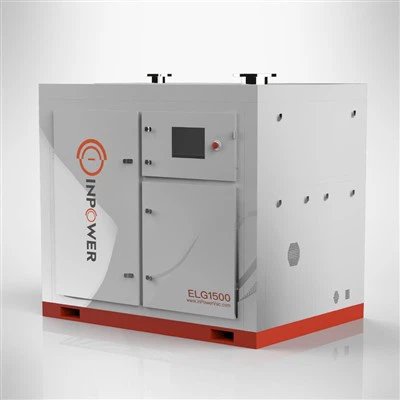
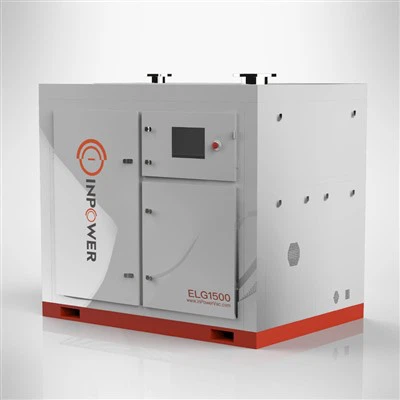


In an oil-sealed rotary vane pump (or dry vane mechanism) an offset rotor fitted with vanes that slide in and out of their housing within a stator ‘chamber’. The vanes rotate and ‘trap’ a quantity of gas which enters through the pump’s inlet port and the volume between the rotor and stator decreases. The resulting compressed gas exits the outlet port to the atmosphere.
The oil employed for oil-seal rotary vane pumps is commonly a distilled mineral oil which has been molecularly doctored to provide a stable fluid with a low vapour pressure. In addition, if the pump is exposed to reactive or corrosive gases, the oil will be further processed to remove any impurities.
Benefits of Oil Sealed Rotary Vane Vacuum Pump
Reliability at its Best
Built with the highest quality materials and precision engineering, our pump is designed to withstand the test of time. Say goodbye to unexpected downtime.
Easy Maintenance
We understand that your time is valuable. That's why our pump is designed for easy maintenance, reducing your maintenance costs and increasing uptime.
Versatile Applications
From research laboratories to industrial processes, our oil sealed rotary vane vacuum pump adapt seamlessly to a wide range of applications. It's your all-in-one vacuum solution. Our M Series for work in moderately aggressive applications.
Compact and Space-Saving
With its sleek design and small footprint, our pump maximizes your workspace without compromising performance.

Rotary Vane Vacuum Pumps
Rotary vane vacuum pumps are one of the most common types of vacuum pumps. They consist of a rotor with vanes that rotate inside a cavity. As the rotor spins, the vanes create chambers of varying volumes, which helps in the suction and compression of gases. These pumps are known for their high vacuum rating and compact size, making them suitable for a wide range of applications.
Liquid Ring Vacuum Pumps
Liquid ring vacuum pumps utilize a liquid, typically water, to create a seal and generate the vacuum. The liquid is rotated in a ring formation within the pump, creating a partial vacuum. These pumps are commonly used in applications that involve handling liquids or gases with high vapor pressure.
Claw Vacuum Pumps
Claw vacuum pumps operate by using two claw-shaped rotors that rotate in opposite directions. As the rotors spin, the claws interlock and create compression chambers, which results in the suction and compression of gases. These pumps are known for their dry and oil-free operation, making them suitable for applications that require a clean and uncontaminated vacuum environment.
Capture or Entrapment Pumps
Capture or entrapment pumps utilize physical or chemical processes to capture and trap molecules, creating a vacuum. These pumps are commonly used in applications where high vacuum levels are required, such as in semiconductor manufacturing or research laboratories.
Automotive Industry
Oil sealed rotary vane vacuum pump play a crucial role in the automotive industry. They are used in various applications, including power brake booster systems, emission control systems, and engine management systems. These pumps help create the required vacuum for efficient operation and control of these systems.
Laboratory Industry
In laboratory settings, oil sealed rotary vane vacuum pump are utilized in a wide range of applications. They are commonly used in vacuum drying, vacuum filtration, rotary evaporation, vacuum distillation, and freeze-drying processes. These pumps provide the necessary vacuum levels to enable precise and controlled experiments and sample preparation.
Plastics Industry
The plastics industry extensively relies on oil sealed rotary vane vacuum pump for various processes. These pumps are used for plastic extrusion, where they help in removing moisture from the raw materials. They are also used in vacuum forming processes, where they create the necessary vacuum for shaping the plastic sheets or molds.
Food Packaging Industry
Oil sealed rotary vane vacuum pump are widely used in the food packaging industry. They are utilized in vacuum packaging machines to remove the air from the package, preserving the freshness and extending the shelf life of the food products. These pumps ensure a tight seal and help maintain the desired vacuum level throughout the packaging process.
Oil sealed rotary vane vacuum pump are typically powered by an electric source, either alternating current (AC) or direct current (DC).
AC power is the most common source for oil sealed rotary vane vacuum pump and systems. Single phase AC motors are well established and are typically cheaper than three phase AC motors, but are also bigger and less efficient.
DC power sources use DC power from a battery or power supply.
Oil sealed rotary vane vacuum pump and systems can be either dry (oil-less) or oil-sealed based on the pump design.
Most rotary vane pumps are oil-sealed, meaning they use oil as an operating fluid to perform multiple functions within the pump. Oil is used to lubricate all moving parts, seal the outlet valve, compress the gap between vanes and the working chamber, and ensures an optimal temperature balance. Rotary vane pumps may use one of three specific lubrication styles.
Other rotary vane pumps are designed dry or oil-less, meaning they use permanently sealed bearings or other isolation technology to eliminate oil in the fluid train. The moving parts of the pump typically still use oil, but in these designs oil is not used to seal valves or spaces in the working chamber, eliminating the possibility of fluid contamination. Dry pumps are typically more expensive than oil-sealed pumps.
Oil sealed rotary vane vacuum pump and systems may incorporate one or more stages in order to generate a vacuum. A stage consists of the working portions of the pump, specifically the working chamber, rotor, and vanes. For many applications, multi-stage pumps may be more efficient than using separate pumps in series.
Rotary vane pumps with four or more stages typically exist as systems in which a one or two-stage rotary vane pump is used in combination with other types of pumps. These systems are employed in applications requiring extremely high vacuums.
Dry pumps rely on internal dimensional accuracy to create a vacuum, while wet pumps use fluid to form a seal. Oil-sealed pumps are wet pumps that specifically use oil to form a seal. Furthermore, a direct drive is used to construct many oil sealed oil sealed rotary vane vacuum pump. Each oil sealed rotary vane vacuum pump is constructed utilizing the same fundamental parts.
Rotor: The pump’s rotor is usually wound with copper. The rotor rotates in this electrical engine and needs energy. The spiral layout's stationary element is called the stator. It encircles the internal surfaces of the motor housing and carries electrical current.
Vanes and Blades: The vanes are large blades affixed to a revolving axis or wheel. The vanes form a seal with the wall of the pumping chamber to stop fluid from flowing back across the pump.
Oil Sump: The oil sump stores the engine oil needed for sealing. An oil pump will send oil out of the sump, through the oil filter, and into the engine block's oil channels. The sealing points are then used to restore the oil to the oil sump.
Suction Flange: A suction tube is attached to a hydraulic tank using suction flanges. They create a seal to stop fluid leaks and pollution from getting into the tank. The suction element is also made possible via flanges without draining the tank.
Cylindrical Housing: The housing covering the pump’s exterior is usually made of aluminum die-casting. The compressor is housed inside.
Motor: A device that transforms electrical energy (AC or DC) into mechanical energy is an electric motor. The motor's magnetic field and the electric current flowing through a wire winding interact to produce the torque applied to the motor shaft.
Float Valve: A float detects changes in elevation on an oil-free surface and reacts by opening or closing a valve.
How To Choose The RightOil Sealed Rotary Vane Vacuum Pump, Vacuum Pump Oil
Selecting the appropriate vacuum pump oil for your specific application is crucial to ensure optimal performance and longevity of the pump. Here are some factors to consider when choosing the right oil:
Operating Conditions: Consider the operating temperature range and pressure requirements of your application. Ensure that the chosen oil can withstand these conditions without compromising its performance.
Manufacturer Recommendations: Consult the vacuum pump manufacturer’s guidelines and recommendations. They often provide specific oil recommendations based on the pump’s design and intended use.
Application Requirements: Evaluate the specific needs of your application. Consider factors such as the desired level of vacuum, the presence of contaminants, and any special considerations unique to your industry or process.
Oil Change Intervals: Take into account the recommended oil change intervals for your pump. Some applications may require more frequent oil changes due to the nature of the process or the presence of contaminants.
Vacuum compression applications are used typically in processes like distillation, degassing, drying stripping, solvent recovery, evaporation, filtration, crystallization, waste gas compression, vapor recovery, reactor service, and gas boosters.
Many vapor/gas streams that need compression in process industries are toxic, explosive, reactive, corrosive, and wet or saturated. When you are evaluating the vacuum technology needed for a process, the first thing to do is to eliminate those pumping systems that are not able to meet the conditions for the process, which will include discharge pressure, gas inlet temperature, capacity, and vacuum level.
Liquid ring pumps are capable of taking on the dirtiest of processes. Their tolerance for harsh environments is high, as it also is for aggressively saturated air that can have or not have vapor loads. Vacuum pumps and compressors using liquid ring technology can also act as direct-contact condensers. When they are required to handle highly condensable vapor loads, the condensation occurs within the liquid ring and leads to an increase in pump efficiency, that leads to an increase in the speed of pumping over the curve of performance (cubic feet per minute/horsepower).
Vacuum pumps using the dry screw technology are more suitable to gas streams that are relatively dry and clean, and when there is zero tolerance to any process contamination.
These pumps achieve deeper partial vacuum levels and must be considered when you require vacuum levels below 10 torr, even though in these applications, multistage liquid ring systems can be used.
There is only one moving part in liquid ring pump designs, which is the impeller/shaft assembly. Bearings in these designs are outside the pumping chamber and in the rotating parts and the casing there is never any metal to metal contact.
Inspect the surrounding environment
Oil sealed rotary vane vacuum pumps require the right conditions to operate at their best. In the worst conditions, they have a greater chance of breaking down and creating a gridlock in your operations.
The airflow around your pump can be critical to its optimal performance. When the pump was first installed, the airflow might have been excellent. Check this frequently for any changes.
Conduct a visual pump inspection
Most oil sealed rotary vane vacuum pumps come equipped with a sight glass. This makes frequent visual inspection of the oil inside the pump a simple matter.
Clean oil will appear about the same color as vegetable oil, which is nearly opaque. As the oil collects contaminants, it will get darker. Highly contaminated oil will be dark brown or even black. By the time it turns this color, the integrity of your pump may be compromised, and it could need off-site servicing.
Do regular oil & filter changes
According to Blower and Vacuum Best Practices, dry pumps typically require an oil change in the gearbox about once per year. You may need to do this twice annually for heavy usage. In comparison, an oil-sealed pump could require an oil and filter change up to monthly depending on their usage and application.
Perform leak testing
By leak testing your pump system periodically after it's been installed, you can ensure that there is a vacuum-tight seal though the various connections. Eliminating these leaks can prolong the life of your pump and improve the quality of the work it produces.
Keeping foreign elements out of your oil sealed rotary vane vacuum pump is critical. This includes debris, moisture, and oxygen, which are all contaminants that can compromise the integrity of your unit and reduce its effectiveness.
Create some leeway in your process
Every pump requires maintenance and downtime to operate at peak performance. Ignoring this fact is asking for trouble, and you'll likely find that your pump quits on you at the worst possible time for your business.
Our Factory
In 2019, inPowerVac conformed to the times, completed the handover of new and old leaders, started its own brand global trade and brand strategy, established the inPowerVac brand, and began to sell in the global market. Although we are constantly innovating, we still insist on producing high-reliability vacuum products.


FAQ
As one of the leading oil sealed rotary vane vacuum pump manufacturers and suppliers in China, we warmly welcome you to wholesale oil sealed rotary vane vacuum pump in stock here from our factory. All customized products are with high quality and competitive price. For quotation, contact us now.
Oil Vacuum Pump Systems, Dry Vane Vacuum Pump, Chemical Plant Vacuum