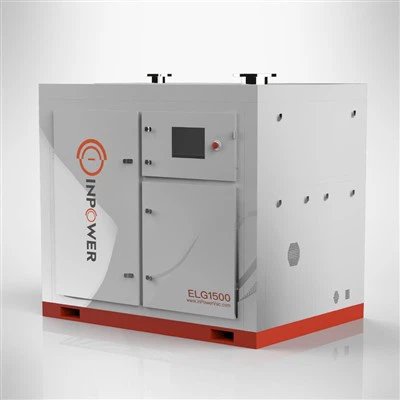
Compact Direct Drive Oil Sealed Vacuum Pump
The Compact Direct Drive Oil Sealed Vacuum Pump is a rotary vane vacuum pump designed for OEM equipment integrators, automated machinery, and general industrial applications where space efficiency, vacuum performance, and operational stability must be balanced.
By eliminating belt-driven mechanics, the motor connects directly to the pumping mechanism via a flexible shaft coupling. This arrangement reduces total components, eliminates routine belt replacement, and significantly reduces the machine footprint for seamless equipment integration.
Technical Specifications
|
Specification |
Technical Parameter / Configuration |
Engineering Notes |
|
Technology Type |
Single-Stage or Two-Stage Rotary Vane |
Stage selection based on target operating pressure |
|
Drive Mechanism |
Direct-Drive (Direct Motor Shaft Coupling) |
Eliminates belt tensioning, wear, and power transmission loss |
|
Pumping Speed |
Model Dependent (m³/h, L/min, CFM) |
Nominal free-air displacement at rated motor speed |
|
Ultimate Vacuum |
Model Dependent (Pa, mbar, Torr) |
Measured with gas ballast closed under clean oil conditions |
|
Electrical Supply |
50 Hz / 60 Hz; Single-Phase / Three-Phase |
Configurable to target installation country standards |
|
Standard Voltages |
110V, 220V, 380V, 415V, 460V |
Confirmed during OEM technical order review |
|
Inlet / Exhaust Ports |
ISO-KF, NPT, or G-Thread options |
Sized to minimize line resistance (conductance loss) |
|
Cooling Method |
Air-Cooled (Forced-Air Motor Fan) |
Requires adequate ventilation clearance inside enclosures |
Key Features & OEM Advantages
Space-Saving Direct-Drive Design
Zero Belt Maintenance: Eliminates belt wear, tensioning adjustments, and particulate debris inside the equipment casing.
Compact Footprint: Shortened overall length enables mounting inside space-restricted machinery, mobile carts, or integrated enclosures.
Precision Engineering & Stable Performance
Micron-Tolerance Components: Precision-machined rotor and vane assemblies maintain tight sealing gaps for continuous vacuum stability.
Internal Oil Circuit: Engineered oil flow paths provide consistent lubrication, thermal control, and reliable internal sealing across long duty cycles.
Full OEM Customization
Motor Configurations: Voltage, frequency, phase, IP ratings, and hazardous-location ratings matched to customer project requirements.
Connection & Mounting Flexibility: Custom mounting plates, inlet manifolds, and exhaust oil mist filters available for production runs.
Applications & Operational Limits
Recommended Applications
Vacuum Packaging: Chamber vacuum sealers, thermoforming equipment, and modified atmosphere packaging (MAP).
Industrial Automation: Vacuum holding fixtures, pick-and-place systems, and automated lifting equipment.
Process Vacuum Chambers: Vacuum forming, resin degassing, vacuum filtration, and lab drying setups.
HVAC/R Service: System evacuation and moisture removal prior to refrigerant charging.
Alternative Technologies Required
A dry or corrosion-resistant vacuum pump technology should be selected if your process involves:
Strict Oil-Free Requirements: Cleanrooms or applications sensitive to oil vapor traces.
Corrosive or Reactive Gases: Heavy chemical exposure that degrades standard vacuum pump oil or internal metals.
Unmanaged Liquid Slugging: Processes carrying large volumes of free water, solvents, or condensable liquids without upstream separation.
Production Quality & Batch Consistency
Incoming Component Verification: Strict dimensional checks on pump housings, rotors, vanes, and shaft seals before assembly.
100% In-Line Vacuum Testing: Every manufactured unit is tested for ultimate vacuum pressure, evacuation speed, and motor power draw.
Vibration & Noise Audit: Acoustic and dynamic balance checks conducted prior to final packaging.
Full Traceability: Serialized inspection records and technical compliance documentation provided for OEM quality tracking.
Buyer Selection Checklist
Selecting a pump solely by free-air pumping speed can result in undersized equipment. Evaluate the following complete system parameters before placing an order:
Working Pressure vs. Ultimate Vacuum: Identify your actual process working pressure rather than relying only on dead-end ultimate vacuum ratings.
Line Conductance: Account for flow restrictions caused by narrow inlet piping, long runs, valves, and inline filters.
Gas Load & Leakage: Estimate total gas volume, outgassing materials, and system leakage rates.
Target Evacuation Time: Calculate the required time to draw the chamber volume down to target working pressure.
FAQ
Q: What is the difference between ultimate vacuum and working pressure?
A: Ultimate vacuum is the lowest absolute pressure the pump can achieve in a sealed system under test conditions. Working pressure is the pressure level at which your actual process operates.
Q: How do inlet piping and valves affect actual pumping performance?
A: Narrow pipe diameters, excessive pipe length, and multiple right-angle elbows create flow resistance (conductance loss). This reduces the effective pumping speed available at the process chamber compared to the pump's nominal rating.
Q: Can an oil-sealed vacuum pump handle condensable vapors or moisture?
A: Yes, within specified limits. Opening the gas ballast valve allows air into the compression chamber, preventing vapor from condensing into the oil during compression.
Q: What routine maintenance is required for direct-drive oil-sealed pumps?
A: Regular maintenance includes monitoring oil sight-glass levels, inspecting oil color for contamination or degradation, performing scheduled oil changes, and checking inlet screens and exhaust mist filter elements.
Q: What details should be provided when requesting an OEM quotation?
A: Provide your required operating vacuum level, chamber volume, target evacuation time, gas composition, local electrical specs (voltage, frequency, phase), mounting constraints, and estimated annual order quantity.
Hot Tags: compact direct drive oil sealed vacuum pump, China compact direct drive oil sealed vacuum pump manufacturers, suppliers, factory, robust rotary vane vacuum pumps, rotary vane vacuum pumps appearance, rotary vane vacuum pumps maintenance, rotary vane vacuum pumps spares, rotary vane vacuum pumps troubleshooting, rotary vane vacuum pumps with motor protection