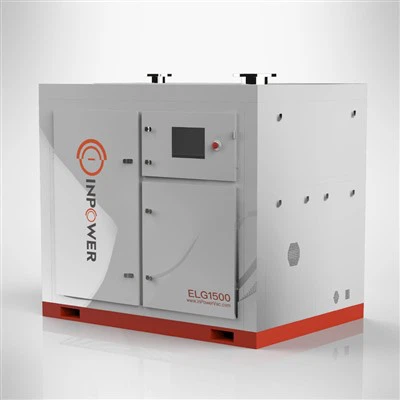
Direct Drive Dual Stage Rotary Vane Vacuum Pump
The direct drive dual stage rotary vane vacuum pump is an oil-sealed mechanical vacuum pump engineered for applications requiring stable performance and deep ultimate vacuum.
By combining a two-stage compression structure with a direct-coupled motor configuration, this pump delivers significantly lower base pressure than single-stage alternatives while eliminating belt transmission components.
Technical Advantages
Two-Stage Compression for Deeper Vacuum
The dual-stage rotary vane structure compresses gas in two consecutive stages, allowing the pump to reach deeper vacuum levels. This makes it ideal for analytical applications and industrial processes where ultimate pressure stability is a critical quality parameter.
Direct-Drive Architecture
Directly coupling the motor to the pump mechanism eliminates traditional belt and pulley transmission systems.
Compact Footprint: Maximizes space efficiency for internal OEM installation.
Low Maintenance: Prevents downtime associated with belt wear, tension adjustment, and replacement.
High Efficiency: Delivers direct power transmission with minimal mechanical loss.
Advanced Oil Sealing & Lubrication
High-grade vacuum oil provides essential sealing, cooling, and lubrication inside the pumping chamber. Integrated gas ballast technology allows effective handling of condensable vapors while protecting internal components against fluid degradation.
Vacuum Performance & Selection Parameters
Effective Pumping Speed
System evacuation time depends on total chamber volume, inlet piping impedance, system leakage, and continuous gas load. Selection should always be based on the effective pumping speed at the target working pressure rather than nominal displacement alone.
Ultimate Pressure & Gas Ballast Management
Ultimate pressure represents the lowest pressure achievable under clean, sealed test conditions. When processing media containing moisture or volatile vapors, opening the gas ballast valve prevents internal condensation, though it may result in a slightly higher base pressure during operation.
Model Selection Guide
Selecting the appropriate pump configuration requires evaluating the entire vacuum process. Oversizing leads to unnecessary energy costs, while undersizing can result in excessive pump-down times or failure to reach operating vacuum.
|
Buyer Requirement |
Information to Confirm |
Engineering Significance |
|
Target Vacuum |
Required working pressure & ultimate pressure |
Determines single-stage vs dual-stage requirement |
|
Chamber Volume |
Total internal system volume |
Establishes displacement capacity for cycle speed |
|
Evacuation Time |
Target time to reach operating pressure |
Serves as baseline for effective pumping speed calculation |
|
Gas / Vapor Load |
Gas composition, moisture level, vapors |
Dictates oil type and gas ballast operating requirements |
|
Operating Cycle |
Continuous vs. intermittent duty |
Determines motor power rating and cooling limits |
|
Electrical Supply |
Voltage, frequency (50/60 Hz), phase (1ph/3ph) |
Ensures global power grid and control system compatibility |
|
Physical Interface |
Inlet/outlet flange size and footprint |
Guarantees mechanical compatibility during assembly |
Technical Specifications & Compliance
|
Specification Parameter |
Technical Details |
|
Product Type |
Direct Drive Dual Stage Rotary Vane Vacuum Pump |
|
Pumping Principle |
Oil-Sealed Rotary Vane |
|
Pumping Stages |
Two Compression Stages |
|
Drive Configuration |
Direct-Coupled Motor Drive |
|
Ultimate Pressure |
Model-Dependent (Refer to Datasheet) |
|
Nominal Pumping Speed |
Model-Dependent (50Hz / 60Hz Options) |
|
Motor Configuration |
Single-Phase / Three-Phase Worldwide Standard |
|
Inlet Connection |
Standard KF/NW Flange or ISO Interface |
|
Compliance Standards |
CE Compliant, ISO 9001:2015 Manufacturing, RoHS |
|
Duty Cycle |
Continuous Duty Operation |
Manufacturing Quality & Quality Assurance
To maintain consistent performance across production batches, every unit undergoes strict quality verification prior to shipment:
Precision Machining: Critical housing tolerances and vane clearances are strictly controlled to maximize volumetric efficiency.
Dynamic Alignment: Direct-drive couplings are precision-aligned to reduce vibration, noise, and bearing stress.
Vacuum Performance Testing: 100% of pumps are tested for ultimate pressure, evacuation curve accuracy, and helium leak tightness.
Electrical Safety Verification: Full insulation resistance, voltage tolerance, and motor load tests are performed prior to dispatch.
Standard Documentation Provided
Product Datasheet & 2D/3D CAD Models
Pumping Speed vs. Inlet Pressure Curves
Factory Acceptance Test Reports
Operation and Maintenance Manual
CE / RoHS Certificates of Conformity
Maintenance Guidelines
Oil Monitoring: Check oil level and color regularly through the sight glass. Degraded oil directly impacts ultimate vacuum depth.
Exhaust Filtration: Inspect exhaust mist filters periodically to prevent backpressure build-up and oil vapor emission.
Connection Sealing: Inspect O-rings and flange seals routinely to maintain system tightness and prevent atmospheric leaks.
FAQ
Q: What is the primary difference between a single-stage and dual-stage rotary vane pump?
A: A dual-stage pump processes gas through two consecutive chambers in series, enabling it to achieve a significantly lower ultimate pressure (deeper vacuum) compared to a single-stage pump.
Q: How does the gas ballast feature protect the pump during vapor extraction?
A: The gas ballast valve introduces a controlled amount of air into the compression stage, diluting condensable vapors so they exhaust without condensing into liquid inside the vacuum oil.
Q: Can this vacuum pump operate continuously in high-duty applications?
A: Yes, these pumps are engineered for continuous operation when operated within their specified pressure ranges, thermal limits, and recommended maintenance schedules.
Q: What technical details are required to select the correct model?
A: Key information includes target working pressure, chamber volume, required pump-down time, gas composition, vapor load, and local electrical specifications (voltage, frequency, phase).
Q: Do you offer OEM customization for system integration?
A: Custom options including non-standard motor voltages, specific flange interfaces (KF, ISO, NPT), specialized lubricants, and private labeling are available for qualified volume orders.
Hot Tags: direct drive dual stage rotary vane vacuum pump, China direct drive dual stage rotary vane vacuum pump manufacturers, suppliers, factory, compact rotary vane vacuum pumps, rotary vane vacuum pumps advantages, rotary vane vacuum pumps for chemical industry, rotary vane vacuum pumps for printing industry, rotary vane vacuum pumps vendors, rotary vane vacuum pumps with overload protection