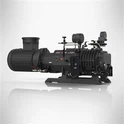
What is the Pumping Speed of a Dry Vacuum Pump System?
As a supplier of Dry Vacuum Pump Systems, I often encounter customers who are curious about the pumping speed of these systems. The pumping speed is a crucial parameter that directly affects the performance and efficiency of a vacuum pump system. In this blog post, I will delve into the concept of pumping speed, its significance, and how it relates to our Dry Vacuum Pump Systems.
Understanding Pumping Speed
Pumping speed, also known as volumetric flow rate, is defined as the volume of gas that a vacuum pump can remove from a chamber per unit of time. It is typically measured in liters per second (L/s), cubic feet per minute (CFM), or cubic meters per hour (m³/h). The pumping speed indicates how quickly a pump can evacuate a given volume of gas and reach a desired vacuum level.
To illustrate this concept, imagine a sealed chamber filled with air. If we connect a vacuum pump to this chamber, the pump will start removing the air molecules, gradually reducing the pressure inside the chamber. The pumping speed determines how fast this process occurs. A pump with a higher pumping speed will be able to evacuate the chamber more quickly than a pump with a lower pumping speed.

Factors Affecting Pumping Speed
Several factors can influence the pumping speed of a dry vacuum pump system. Understanding these factors is essential for selecting the right pump for your specific application.
- Pump Design: The design of the vacuum pump plays a significant role in determining its pumping speed. Different types of pumps, such as rotary vane pumps, diaphragm pumps, and screw pumps, have different pumping mechanisms and characteristics. For example, a screw pump generally has a higher pumping speed compared to a diaphragm pump due to its more efficient gas transfer mechanism.
- Inlet Pressure: The pumping speed of a vacuum pump is not constant but varies with the inlet pressure. As the pressure inside the chamber decreases, the pumping speed typically decreases as well. This is because the pump has to work harder to remove the remaining gas molecules at lower pressures. Most pump manufacturers provide pumping speed curves that show the relationship between the pumping speed and the inlet pressure.
- Gas Type: The type of gas being pumped can also affect the pumping speed. Different gases have different molecular weights and viscosities, which can influence how easily they can be pumped. For example, lighter gases such as hydrogen and helium are generally easier to pump than heavier gases such as nitrogen and argon.
- Temperature: The temperature of the gas and the pump itself can impact the pumping speed. Higher temperatures can increase the gas viscosity, making it more difficult for the pump to remove the gas. Additionally, excessive heat can cause the pump components to expand, leading to reduced clearances and decreased pumping efficiency.
Significance of Pumping Speed in Different Applications
The pumping speed is a critical parameter in various applications that require vacuum technology. Here are some examples:
- Industrial Processes: In industrial manufacturing processes such as semiconductor fabrication, vacuum coating, and chemical processing, a high pumping speed is often required to achieve fast cycle times and improve productivity. For instance, in a vacuum coating process, a high pumping speed is necessary to quickly evacuate the coating chamber and create a clean environment for the deposition of thin films.
- Laboratory Research: In laboratory settings, vacuum pumps are used for a wide range of applications, including freeze drying, vacuum distillation, and mass spectrometry. The pumping speed determines how quickly the samples can be processed and how accurately the experiments can be conducted. For example, in freeze drying, a high pumping speed is essential to remove the moisture from the samples rapidly and preserve their integrity.
- Medical and Pharmaceutical Applications: Vacuum pumps are also widely used in the medical and pharmaceutical industries for applications such as suction devices, vacuum ovens, and sterilization equipment. A reliable and efficient vacuum pump with an appropriate pumping speed is crucial to ensure the safety and effectiveness of these applications.
Our Dry Vacuum Pump Systems and Pumping Speed
At our company, we offer a wide range of Dry Vacuum Pump Systems designed to meet the diverse needs of our customers. Our pumps are engineered with advanced technology and high-quality materials to provide reliable performance and high pumping speeds.
We understand that different applications require different pumping speeds, and we work closely with our customers to select the right pump for their specific requirements. Whether you need a pump with a high pumping speed for industrial processes or a more compact pump with a moderate pumping speed for laboratory use, we have the solution for you.
In addition to our standard pump models, we also offer customized solutions to meet your unique needs. Our team of experts can work with you to design and build a vacuum pump system that is tailored to your specific application and pumping speed requirements.
Conclusion
The pumping speed of a dry vacuum pump system is a crucial parameter that determines its performance and efficiency. By understanding the factors that affect pumping speed and selecting the right pump for your specific application, you can ensure optimal performance and productivity.
If you are in the market for a dry vacuum pump system and need assistance in selecting the right pump with the appropriate pumping speed, please feel free to contact us. Our team of experts will be happy to discuss your requirements and provide you with a customized solution. You can also explore our product range on our website, including Freeze Dryer Vacuum Pumps, Vacuum Pump Suppliers, and Oil Vacuum Pump Systems.
We look forward to working with you to meet your vacuum pumping needs.