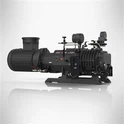
What is the effect of gas temperature on the performance of dry screw vacuum pumps?
As a supplier of dry screw vacuum pumps, I've witnessed firsthand the critical role that gas temperature plays in the performance of these essential industrial machines. Dry screw vacuum pumps are widely used in various industries, from semiconductor manufacturing to chemical processing, due to their high efficiency, reliability, and oil-free operation. However, the temperature of the gas being pumped can significantly impact the pump's performance, efficiency, and lifespan. In this blog post, I'll delve into the effects of gas temperature on dry screw vacuum pumps and discuss how to optimize their performance under different temperature conditions.
How Gas Temperature Affects Dry Screw Vacuum Pumps
The performance of dry screw vacuum pumps is closely related to the temperature of the gas they handle. Here are some key ways in which gas temperature can influence the operation of these pumps:
1. Viscosity and Flow Rate
Gas viscosity is a crucial factor that affects the flow rate and pumping efficiency of dry screw vacuum pumps. As the gas temperature increases, its viscosity decreases. According to the kinetic theory of gases, higher temperatures mean that gas molecules have more kinetic energy and move more freely. This reduced viscosity allows the gas to flow more easily through the pump's compression chambers. However, this can also lead to challenges. At lower viscosities, the gas may leak more readily between the screw rotors and the pump housing, reducing the overall pumping efficiency.
For example, in a chemical process where the gas temperature is relatively high, the reduced viscosity can cause a decrease in the pump's volumetric efficiency. This means that the pump may not be able to move as much gas as it would at a lower temperature, potentially leading to longer pumping times and increased energy consumption.
2. Thermal Expansion
Dry screw vacuum pumps are precision-engineered machines with tight clearances between the screw rotors and the pump housing. When the gas temperature rises, the components of the pump, including the rotors and the housing, undergo thermal expansion. This expansion can reduce the clearances between the moving parts, increasing the risk of mechanical interference and wear.
If the temperature increase is significant, the rotors may come into contact with each other or the housing, causing damage to the pump. For instance, in a semiconductor manufacturing process where the pump is used to evacuate a chamber during high - temperature deposition processes, the thermal expansion of the pump components can lead to premature failure if not properly managed.


3. Compression Ratio and Power Consumption
The compression ratio of a dry screw vacuum pump is affected by the gas temperature. As the gas temperature increases, the specific volume of the gas also increases. To achieve the same level of compression, the pump has to work harder, which leads to an increase in power consumption.
A higher compression ratio is required to pump hot gas to the desired vacuum level compared to cooler gas. This means that the pump motor has to provide more power to drive the compression process. In a large - scale industrial application, such as a food packaging plant where multiple dry screw vacuum pumps are used, the increased power consumption due to high gas temperatures can result in substantial additional operating costs.
4. Condensation and Corrosion
When the gas temperature is high and then suddenly drops within the pump, condensation can occur. This is especially true if the gas contains water vapor or other condensable substances. Condensation can lead to the formation of liquids inside the pump, which can cause corrosion of the pump components.
For example, in a pharmaceutical manufacturing process where the gas may contain solvents and moisture, the condensation inside the pump can corrode the metal parts, reducing the pump's lifespan and performance. The presence of liquids can also disrupt the smooth operation of the screw rotors, leading to increased noise and vibration.
Optimizing Dry Screw Vacuum Pump Performance at Different Gas Temperatures
To ensure the optimal performance of dry screw vacuum pumps under different gas temperature conditions, several strategies can be employed:
1. Cooling Systems
Implementing effective cooling systems is essential to control the temperature of the pump and the gas being pumped. Air - cooled dry screw vacuum pumps, such as those available at Air - Cooled Dry Screw Vacuum Pumps, use fans to dissipate heat from the pump's surface. Water - cooled systems can also be used for more demanding applications, where a higher heat transfer rate is required.
By maintaining the pump at an appropriate operating temperature, the risk of thermal expansion and mechanical damage can be minimized. Additionally, cooling the gas before it enters the pump can help reduce its temperature and improve the pump's performance.
2. Material Selection
Choosing the right materials for the pump components is crucial, especially when dealing with high - temperature gases. Materials with high thermal stability and corrosion resistance should be used. For example, stainless steel is a popular choice for pump components in applications where the gas may be corrosive or at high temperatures.
Some advanced dry screw vacuum pumps are designed with special coatings on the rotors and housing to improve their resistance to wear and corrosion. These coatings can help extend the pump's lifespan and maintain its performance over time.
3. Temperature Monitoring and Control
Installing temperature sensors in the pump and the gas inlet and outlet allows for real - time monitoring of the temperature. By continuously monitoring the temperature, operators can detect any abnormal temperature changes and take appropriate actions.
Automated control systems can be used to adjust the cooling system or the pump's operating parameters based on the temperature readings. For example, if the gas temperature exceeds a certain threshold, the cooling system can be ramped up to bring the temperature back to a safe level.
4. Pre - treatment of the Gas
In applications where the gas contains condensable substances or is at a very high temperature, pre - treatment of the gas can be beneficial. This can include using filters to remove solid particles and condensers to remove moisture from the gas before it enters the pump.
For instance, in a petrochemical plant, a gas pre - treatment system can be installed to cool the gas and remove any condensable hydrocarbons. This not only protects the pump from corrosion and damage but also improves its overall performance.
Conclusion
The gas temperature has a profound impact on the performance, efficiency, and lifespan of dry screw vacuum pumps. As a supplier of these pumps, I understand the importance of considering gas temperature in the design, operation, and maintenance of dry screw vacuum pumps. By understanding the effects of gas temperature and implementing appropriate strategies to optimize pump performance, industries can ensure reliable and efficient operation of their vacuum systems.
If you're in the market for a dry screw vacuum pump or need advice on how to optimize the performance of your existing pump, we're here to help. Whether you're looking for an Oil Free Screw Vacuum Pump or an Explosion Proof Dry Vacuum Pump, our team of experts can provide you with the right solutions for your specific application. Contact us to discuss your requirements and explore how our dry screw vacuum pumps can meet your needs.
References
- Bird, R. B., Stewart, W. E., & Lightfoot, E. N. (2007). Transport Phenomena (2nd ed.). Wiley.
- Incropera, F. P., & DeWitt, D. P. (2002). Fundamentals of Heat and Mass Transfer (5th ed.). Wiley.
- Shapiro, A. H. (1953). The Dynamics and Thermodynamics of Compressible Fluid Flow, Vol. 1. Ronald Press.